Plagiarizing View of the Hebrews
Ethan Smith’s View of the Hebrews is a book about the Jewish origins of Native Americans. Published seven years prior, it is considered source material for the Book of Mormon.
-
LDS Church Historian B. H. Roberts performed his own exhaustive comparison and analysis of these two books and concluded there is merit to this criticism.
See The Parallels below. - Contrary to popular belief in Mormon circles, the Book of Mormon was not the first to suggest that Jews are the ancestral origins of American Indians.

It is often represented by Mormon speakers and writers, that the Book of Mormon was first to represent the American Indians as descendants of the Hebrews: holding that the Book of Mormon is unique in this. The claim is sometimes still ignorantly made. | |
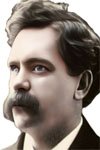 | — B. H. Roberts
Mormon Seventy and Church Historian
|
- Many of these works predate the publication of the Book of Mormon.
For years such materials as were then found and discussed, theories as to the origin of the American Indians, including "the ten lost tribes" theory of Hebrew infusion into the American race, together with frequent mention of cultural traits favorable to this supposed Hebrew infusion—all this was matter of common speculation in the literature of America, before the publication of either Priest's American Antiquities or the Book of Mormon. | |
| — B. H. Roberts
Mormon Seventy and Church Historian
|
A Selection of Books about the Jewish Origins of American Indians:
| 1775 | The History of the American Indians , by James Adair. |
| 1799 | An Essay on the Propagation of the Gospel, by Charles Crawford. Second edition 1801. |
| 1816 | A Star in the West; or, A Humble Attempt to Discover the Long Lost Ten Tribes of Israel, by Elias Boudinot. |
| 1823 | View of the Hebrews, by Ethan Smith. Second edition 1825. |
| 1824 | The Wonders of Nature and Providence, Displayed, by Josiah Priest. |
| 1828 | A View of the American Indians, by Israel Worsley. |
| 1830 | Book of Mormon, by Joseph Smith |
- Joseph Smith had access to these early works.
It is altogether probable that these two books—Priest's Wonders of Nature and Providence, 1824; and Ethan Smith's View of the Hebrews 1st edition 1823, and the 2nd edition 1825—were either possessed by Joseph Smith or certainly known by him, for they were surely available to him. | |
| — B. H. Roberts
Mormon Seventy and Church Historian
|
- Ethan Smith, who was a pastor and author of View of the Hebrews, lived in Poultney, Vermont, where Oliver Cowdery, a scribe for the Book of Mormon, also resided. Oliver’s family attended the Congregational church where Ethan Smith pastored.
- Joseph quoted from View of the Hebrews.
If such may have been the fact, that a part of the Ten Tribes came over to America, in the way we have supposed, leaving the cold regions of Assareth behind them in quest of a milder climate, it would be natural to look for tokens of the presence of Jews of some sort, along countries adjacent to the Atlantic. In order to this, we shall here make an extract from an able work: written exclusively on the subject of the Ten Tribes having come from Asia by the way of Bherings Strait, by the Rev. Ethan Smith, Pultney, Vt., who relates as follows:... -Smith's view of the Hebrews. p. 220. | |
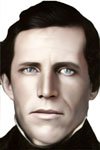 | — Joseph Smith
Mormonism founder
|
The Parallels
A summary of B. H. Robert’s comparison of View of the Hebrews and the Book of Mormon.| View of the Hebrews | Book of Mormon | |
|---|---|---|
| Published |
1823, First Edition 1825, Second Edition |
1830, First Edition |
| Location | Vermont Poultney, Rutland County |
Vermont Sharon, Windsor County Note: Windsor County is next to Rutland County. |
| Destruction of Jerusalem | ✓ | ✓ |
| The scattering of Israel | ✓ | ✓ |
| The restoration of the Ten Tribes | ✓ | ✓ |
| Hebrews leave the Old World for the New World | ✓ | ✓ |
| Religion a motivating factor | ✓ | ✓ |
| Migrations a long journey | ✓ | ✓ |
| Encounters ‘seas’ of ‘many waters’ | ✓ | ✓ |
| The Americas an uninhabited land | ✓ | ✓ |
| Settlers journey northward | ✓ | ✓ |
| Encounter a valley of a great river | ✓ | ✓ |
| A unity of race (Hebrew) settle the land and are the ancestral origin of American Indians | ✓ | ✓ |
| Hebrew the origin of Indian language | ✓ | ✓ |
| Egyptian hieroglyphics | ✓ | ✓ |
| Lost Indian records | ✓ A set of ‘yellow leaves’ buried in Indian hill. Roberts noted the leaves may be gold. |
✓ An ancient Indian record on gold plates buried in a hill. |
| Breastplate, Urim & Thummim | ✓ | ✓ |
| Prophets, spiritually gifted men transmit generational records | ✓ | ✓ |
| The Gospel preached in the Americas | ✓ | ✓ |
| Quotes whole chapters of Isaiah | ✓ | ✓ |
| Messiah visits the Americas | ✓ Quetzalcoatl, the white bearded Mexican ‘Messiah’ |
✓ |
| Good and bad are a necessary opposition | ✓ | ✓ |
| Generosity encouraged and pride denounced | ✓ | ✓ |
| Polygamy denounced | ✓ | ✓ |
| Idolatry and human sacrifice | ✓ | ✓ |
| Sacred towers and high places | ✓ | ✓ |
| Hebrews divide into two classes, civilized and barbarous | ✓ | ✓ |
| Civilized thrive in art, written language, metallurgy, navigation | ✓ | ✓ |
| Government changes from monarchy to republic | ✓ | ✓ |
| Civil and ecclesiastical power is united in the same person | ✓ | ✓ |
| Long wars break out between the civilized and barbarous | ✓ | ✓ |
| Extensive military fortifications, observations, watch towers | ✓ | ✓ |
| The barbarous exterminate the civilized | ✓ | ✓ |
| Discusses the United States | ✓ | ✓ |
| Ethan / Ether | Roberts noted, “Ethan is prominently connected with the recording of the matter in the one case, and Ether in the other.” | |
- Source: Studies of the Book of Mormon, pp. 240-242, 324-344
- Roberts concluded that the parallels between the two books poses a serious problem for the authenticity of Joseph Smith’s Book of Mormon.
Did Ethan Smith's View of the Hebrews furnish structural material for Joseph Smith's Book of Mormon? It has been pointed out in these pages that there are many things in the former book that might well have suggested many major things in the other. Not a few things merely, one or two, or a half dozen, but many; and it is this fact of many things of similarity and the cumulative force of them that makes them so serious a menace to Joseph Smith's story of the Book of Mormon's origin. | |
| — B. H. Roberts
Mormon Seventy and Church Historian
|
Plagiarizing the King James Version
Book of Isaiah
The Book of Mormon quotes extensively from the Book of Isaiah, including entire chapters, and often copying the King James Version nearly verbatim. In addition to this table below, the book also includes over 50 verses from Isaiah that are quoted or paraphrased.| Isaiah | Book of Mormon | Isaiah | Book of Mormon | Isaiah | Book of Mormon | ||
|---|---|---|---|---|---|---|---|
| Isaiah 2 | 2 Nephi 12 | Isaiah 9 | 2 Nephi 19 | Isaiah 48 | 1 Nephi 20 | ||
| Isaiah 3 | 2 Nephi 13 | Isaiah 10 | 2 Nephi 20 | Isaiah 49 | 1 Nephi 21 | ||
| Isaiah 4 | 2 Nephi 14 | Isaiah 11 | 2 Nephi 21 | Isaiah 50 | 2 Nephi 7 | ||
| Isaiah 5 | 2 Nephi 15 | Isaiah 12 | 2 Nephi 22 | Isaiah 51 | 2 Nephi 8 | ||
| Isaiah 6 | 2 Nephi 16 | Isaiah 13 | 2 Nephi 23 | Isaiah 52 | 3 Nephi 20 | ||
| Isaiah 7 | 2 Nephi 17 | Isaiah 14 | 2 Nephi 24 | Isaiah 53 | Mosiah 14 | ||
| Isaiah 8 | 2 Nephi 18 | Isaiah 29 | 2 Nephi 27 | Isaiah 54 | 3 Nephi 22 |
- Some scholars think that Isaiah chapters 40 to 55 were written during the Babylonian captivity after the Jews had already left for the New World in the Book of Mormon. If so, their inclusion in the Book of Mormon would be anachronistic.
- Joseph Smith’s 1830 translation reads nearly verbatim to the 1611 King James Version. This indicates that he did not perform a translation from Reformed Egyptian, but was mostly copying from the KJV.
- Compare Isaiah 3:18-23
|
|
||
|
In that day the Lord will take away the bravery of their tinkling ornaments about their feet, and their cauls, and their round tires like the moon, The chains, and the bracelets, and the mufflers, The bonnets, and the ornaments of the legs, and the headbands, and the tablets, and the earrings, The rings, and nose jewels, The changeable suits of apparel, and the mantles, and the wimples, and the crisping pins, The glasses, and the fine linen, and the hoods, and the vails. |
In that day the Lord will take away the bravery of their tinkling ornaments, and cauls, and round tires like the moon, The chains, and the bracelets, and the mufflers, The bonnets, and the ornaments of the legs, and the headbands, and the tablets, and the ear-rings, The rings, and nose jewels; The changeable suits of apparel, and the mantles, and the wimples, and the crisping pins; The glasses, and the fine linen, and hoods, and the veils. |
||
|
— Isaiah 3:18-23
1611 King James translation
of Isaiah, Masoretic Hebrew
|
|
— 2 Nephi 13:18-23
1830 Joseph Smith translation of Isaiah, Reformed Egyptian
|
Italicized Words
To help clarify the meaning of the text, the King James Version inserts additional words not found in the original text. It distinguishes those added words by italicizing them.
- Therefore, we would not expect the Book of Mormon—completed by 421 AD—to have the same italicized words that the KJV added over a millennium later. Yet we see this effect throughout the book.
-
Compare Isaiah 9:1
This example, which is dated in the Book of Mormon to be around 550 BC, quotes nearly verbatim from the 1611 AD KJV translation of Isaiah 9:1 and includes the same italicized words.
|
|
||
|
Nevertheless the dimness shall not be such as was in her vexation, when at the first he lightly afflicted the land of Zebulun and the land of Naphtali, and afterward did more grievously afflict her by the way of the sea, beyond Jordan, in Galilee of the nations. |
Nevertheless, the dimness shall not be such as was in her vexation, when at first he lightly afflicted the land of Zebulun, and the land of Naphtali, and afterwards did more grievously afflict by the way of the Red Sea beyond Jordan in Galilee of the nations. |
||
|
|
— Isaiah 9:1
King James Version
|
|
— 2 Nephi 19:1
|
- Furthermore, Joseph’s qualification of the sea here as the ‘Red Sea’ creates additional problems.
- Zebulun and Naphtali are in between the Mediterranean Sea and the Sea of Galilee. The ‘sea beyond Jordan in Galilee’ is most likely the Sea of Galilee.
- The Red sea is 250 miles away in the opposite direction of Jordan!
- ‘Red sea’ is not found in any ancient Isaiah manuscripts.
- Jesus Christ quotes Isaiah in Matthew 4:14-15 and does not mention the Red sea.
-
Compare Malachi 3:10
In this example, the Book of Mormon contains the same seven added words as the KJV.
|
|
||
|
And pour you out a blessing, that there shall not be room enough to receive it. |
And pour you out a blessing, that there shall not be room enough to receive it. |
||
|
|
— Malachi 3:10
King James Version
|
|
— 3 Nephi 24:10
|
Translation Errors
Our understanding today of the Hebrew language is much more advanced than it was in the early 1600's when King James authorized an English translation of the Bible. Somehow, the divine process guiding Joseph’s Book of Mormon translation didn’t prevent him from making the same errors.
-
Isaiah 2:16
In this example, where the KJV uses ‘pictures’, a better translation would be ‘crafts’ or ‘vessels’, which would fit the context better.
|
|
|||
|
And upon all the ships of Tarshish, and upon all pleasant pictures. |
And upon all the ships of Tarshish, and upon all pleasant pictures. |
|||
|
|
— Isaiah 2:16
King James Version
|
|
— 2 Nephi 12:16
|
|
-
Lucifer
The name ‘Lucifer’ comes from an improper translation in the KJV—only used once in Isaiah 14:12. Modern translations correct this, as the text does not refer to the devil, but to the King of Babylon. The Book of Mormon repeats this error. 2 Nephi 24:12 -
Holy Spirit / Holy Ghost
The KJV translates the Greek hagios (holy) pneuma (spirit) as ‘Holy Ghost’, but it is not consistent. For example, Luke 11:13 is ‘Holy Spirit’. We should not see an ancient Reformed Egyptian text produce the same title traits unique to the KJV. The Book of Mormon uses both in the same verse!
And the gift of the Holy Ghost, and quench the Holy Spirit. | |
| — Prophet Jacob
|
King James English
An oddity of the Book of Mormon, published in 1830, is that it uses antiquated Elizabethan era English, resembling the style of the 1611 King James Version.

- Joseph Smith’s other writings, such as his history and diary, use the modern English of his day. Making the Book of Mormon seem antiquated was deliberate.
- Mark Twain, considered ‘the father of American literature’, agrees that the author tried too hard to make the narrative read like the KJV.
The author labored to give his words and phrases the quaint, old-fashioned sound and structure of our King James’s translation of the Scriptures; and the result is a mongrel—half modern glibness, and half ancient simplicity and gravity. The latter is awkward and constrained; the former natural, but grotesque by the contrast. Whenever he found his speech growing too modern—which was about every sentence or two—he ladled in a few such Scriptural phrases as "exceeding sore," "and it came to pass," etc., and made things satisfactory again. "And it came to pass" was his pet. If he had left that out, his Bible would have been only a pamphlet. | |
 | — Mark Twain
Author
|
-
"And it came to pass"
Readers of the KJV will recognize this phrase. The Book of Mormon uses it proportionately 882% more than the KJV. To contrast, the phrase is used about once every 100 verses in the KJV, and about 1 in 5 verses in the Book of Mormon. -
"Exceedingly"
Exceedingly is used in the Book of Mormon proportionately 1,963% more than in the KJV. - Words Magnified in Frequency Compared to the KJV
| Word | Usage |
|---|---|
| Insomuch | 2,586% |
| Naught | 1,800% |
| Durst | 1,267% |
| Beholdest | 1,100% |
| Inasmuch | 1,033% |
| Believest | 1,000% |
| Repenteth | 850% |
| Beheld | 711% |
| Didst | 633% |
| Notwithstanding | 558% |
| Nevertheless | 536% |
| Meaneth | 533% |
| Hitherto | 417% |
| Oft | 400% |
| Wherefore | 355% |
| Wax | 350% |
| Whoredoms | 300% |
| Nay | 259% |
| Whoso | 233% |
| Smitten | 224% |
| Ye | 208% |
| Thus | 199% |
| Doth | 191% |
| Bringeth | 175% |
| Hearken | 167% |
| Iniquity | 152% |
| Wroth | 150% |
-
A Sample of Antiquated Words used in the Book of Mormon
The author’s zeal to create an antiquated feel led to excessive use of -est, -eth, -st, etc.
| Advocateth | Mingleth |
| Allotteth | Murdereth |
| Atoneth | Numbereth |
| Awaiteth | Overpowereth |
| Beginneth | Pretendeth |
| Beheldest | Scorcheth |
| Beholdest | Shouldst |
| Cheateth | Showeth |
| Claimeth | Spouteth |
| Comprehendeth | Spurneth |
| Confoundeth | Supposeth |
| Counseleth | Sweepeth |
| Covenanteth | Swelleth |
| Decreeth | Tortureth |
| Deniest | Trampleth |
| Enacteth | Transformeth |
| Exclaimeth | Turneth |
| Fulfilleth | Whispereth |
| Granteth | Wondereth |
| Manifesteth | Wouldst |
| Mattereth | Yoketh |